Author: Editor

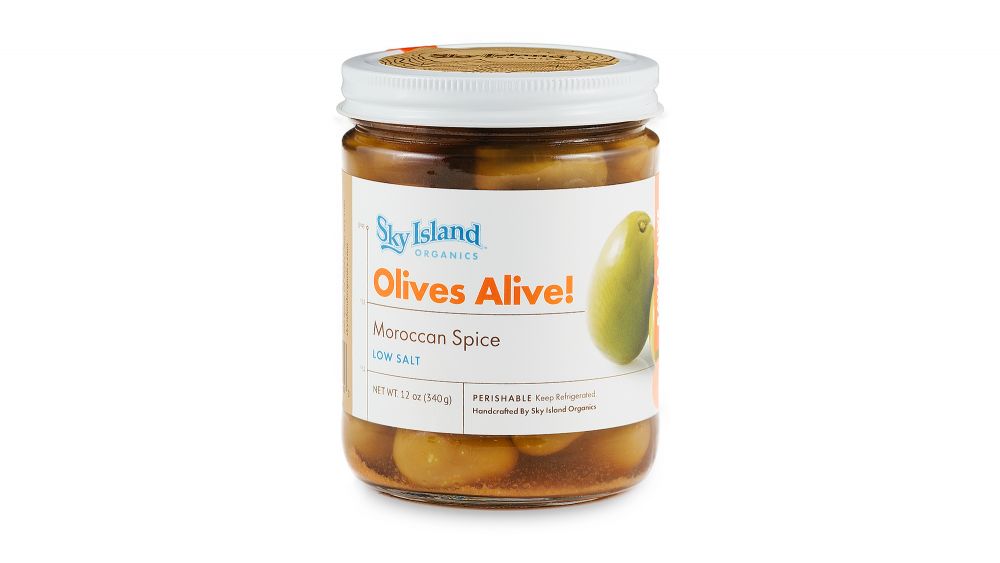
  • Sky Islands Organics Organic Moroccan Spice Sevillano Olives

    Sky Islands Organics Organic Moroccan Spice Sevillano Olives

    Garlic and warming spices compliment but don’t out-shine the rich flavor of this Sevillano olive.

    Serve straight out of the jar, tossed over a salad, or enjoy a raw Moroccan-style breakfast and serve with sweet mint tea, sliced tomatoes, and cucumbers.

    Our olives are sourced from Good Faith Farm in Flournoy, California.

    • The only truly raw live-cultured olives in California
    • Low-salt
    • Raw, living, and probiotic
    • No lye or chemicals of any kind
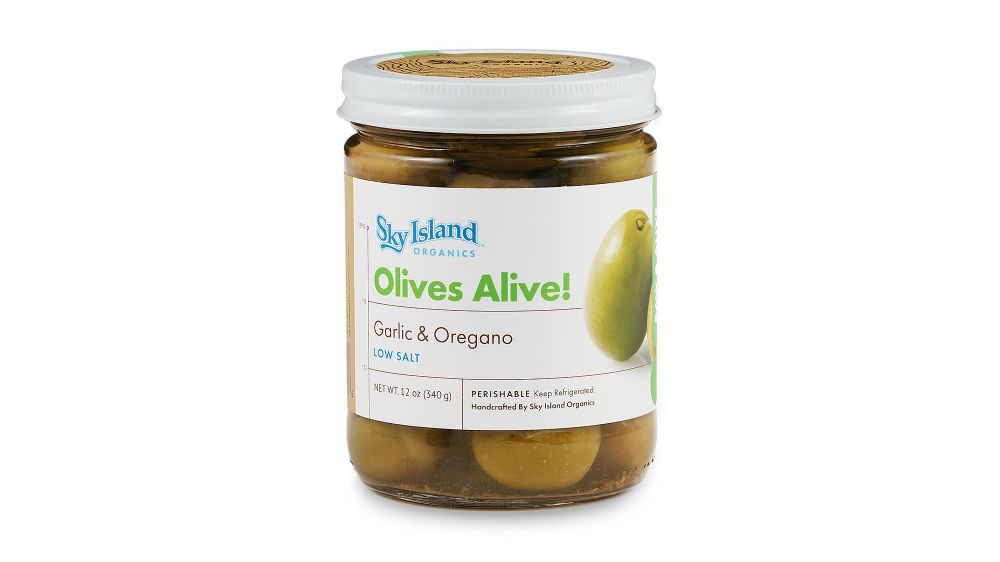
  • Sky Islands Organics Organic Garlic & Oregano Sevillano Olives

    Sky Islands Organics Organic Garlic & Oregano Sevillano Olives

    Piquant notes of garlic and fresh oregano, balanced by salt from the ancient sea beds of Utah enhance the tart and fruity flavor of this Sevillano olive.

    Enjoy straight out of the jar, toss over a salad, or pair with a raw soft goat cheese and Sky Island Organics Sprouted Pistachios.

    Our olives are sourced from Good Faith Farm in Flournoy, California.

    • The only truly raw live-cultured olives in California
    • Low-salt
    • Raw, living, and probiotic
    • No lye or chemicals of any kind
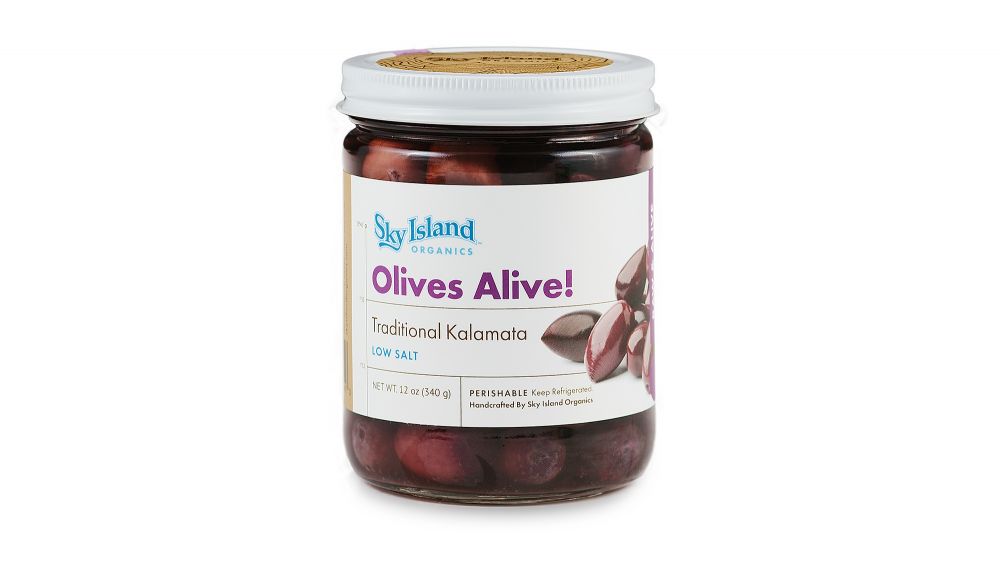
  • Sky Islands Organics Organic Plain Kalamata Olives

    Sky Islands Organics Organic Plain Kalamata Olives

    Think you know kalamatas? Slow cultured using traditional low-salt methods, the true flavor of these rich and fruity olives shines through.

    Toss with lettuce, thinly sliced red onions, a drizzle of olive oil and vinegar and top with a raw goat feta cheese for a delicious raw take on a Greek salad.

    Our olives are sourced from Good Faith Farm in Flournoy, California.

    • The only truly raw live-cultured olives in California
    • Low salt
    • Raw, living, and probiotic
    • No lye or chemicals of any kind
  • Nature’s Path Invest in a Sustainable Future with Purchase of 2,760 Acres of Organic Farmland

    Nature’s Path Invest in a Sustainable Future with Purchase of 2,760 Acres of Organic Farmland

    Press Release from Nature’s Path

    Richmond, BC (May 21, 2014) – Nature’s Path, North America’s largest independent organic cereal company, lives by the mantra “always leave the earth better than you found it.” This week, the company took another step along that path with the purchase of 2,760 acres in northern Montana that will help increase organic farmland, attract and educate new farmers, as well as meet the growing demand for organic grains and legumes.

    The need for organic farmland has increased as the demand continues to grow at an expected rate of 14 percent through 2018[1]. At the same time, the number of farmers is declining, down 4 percent since 2007[2], as older farmers retire without enough new farmers to take their place.

    “As an independent, family-run company, we have the freedom to put our money where our heart is, in support of sustainable agriculture—beyond just making organic products,” said Arran Stephens, Founder and CEO of Nature’s Path. “By purchasing fertile land and working with organic family farmers, we ensure the purity of our foods, increase organic acreage to sustain growth, prevent poisoning the environment, and provide for future generations.”

    This land has had no agri-chemicals or fertilizers on it for over 20 years and is currently being tilled and planted with wheat, oats, Kamut®, lentils, peas, buckwheat and safflower. Grains are rotated with legumes, which fix nitrogen in the soil, while the safflower oil is used as an innovative bio-fuel for farm equipment.

    A vital element to ensure organic farmland and food for generations to come is attracting and training a new generation of farmers. Nature’s Path is proud to work together with Doug Crabtree and Anna Jones-Crabtree of Vilicus Farms to farm the land as well as support their one-of-a-kind organic farmer training institute in Montana through which younger grain farmers apprentice to learn all aspects of the trade.

    “Working with Doug and Anna, we hope to attract younger farmers and prepare them for successful careers,” said Dag Falck, Organic Program Manager at Nature’s Path. “We have the utmost respect for organic farmers and are truly dedicated to assisting them in any way we can.” As part of the company’s mission, Nature’s Path purchased two farms in Saskatchewan in 2008; the addition of the Montana farm increases their stewardship to 5,640 acres, in addition to dozens of independent farmer families and many thousands of acres across North America who grow and supply their organic commodities.

    Link:  http://us.naturespath.com/press-release/natures-path-invests-sustainable-future-purchase-2760-acres-organic-farmland

  • Organic food has less pesticide content and is healthier than convention, more science proven

    www.naturalnews.com

    (NaturalNews) Organophosphate pesticides (OPs) are among the most used pesticides in agriculture. They are basically neurotoxic, causing neurological issues, learning and developmental disorders and depression, and sometimes leading to suicide.

    Just to make sure everyone got their fair share of neurotoxic OPs, the EPA estimated that about 33 million pounds of organophosphate pesticides were used in 2007. That’s a fraction of the 1.1 billion pounds of pesticides used mostly by Big Ag, 80 percent.

    There have been reductions in OP use, but the addition of other pesticides and herbicides applied in increasing amounts has more then covered the positive gains of those reductions, as conventional and GMO farming practices demand ever more toxins to maintain their production.

    Odd how organic farmers manage without all that.

    But a Boise State’s School of Allied Health Sciences research group in decided to use the OP group of pesticides as the main marker for their research to determine if organic food offered a viable health difference.

    The Boise research approach

    Neurological and other health effects have been associated with OP residues among farm workers, including suicide after extreme depression in Chinese farmers. Even children whose mothers were pregnant while living near farms in California that received generous spraying have shown definite negative impacts on learning abilities and increased tendencies toward ADHD symptoms and behavioral issues.

    But for this study, assistant professor and lead author Cynthia Curl collaborated with others in different locations and created the study, called “Estimating Pesticide Exposure from Dietary Intake and Organic Food Choices: The Multi-Ethnic Study of Atherosclerosis (MESA).”

    As the name may imply, their study population of 4,466 came from within the existing MESA group, just as many other broad studies employ large nurses’ groups whose markers, habits and medical records are readily accessible.

    Cynthia and her colleagues used urinary dialkylphosphate (DAP) levels among the subgroups within that major group and compared the levels between groups with reported dietary consumption of non-organic produce and those whose organic produce consumption was at least moderate.

    The Boise Allied Health study concluded: Long-term dietary exposure to OPs were estimated from dietary intake data, and estimates were consistent with DAP measurements. More frequent consumption of organic produce was associated with lower DAPs.

    Professor Curl has high hopes for variations and extensions of this study. “The next step is to use these exposure predictions to examine the relationship between dietary exposure to pesticides and health outcomes, including neurological and cognitive endpoints. We’ll be able to do that in this same population of nearly 4,500 people,” she said.

    And further down the road, Professor Curl envisions, “If we can predict pesticide exposure using dietary questionnaire data, then we may be able to understand the potential health effects of dietary exposure to pesticides without having to collect biological samples from people. That will allow research on organic food to be both less expensive and less invasive.”

    For now, Cynthia recommends everyone at least avoid the EWG (Environmental Working Group) Dirty Dozen List, which lists the 12 most heavily chemically sprayed fruits and veggies that you must replace with organic. The EWG also has a Clean Fifteen List, the 15 least chemically sprayed fruits and veggies, which indicates that it’s safe to pinch pennies by purchasing a Clean Fifteen avocado instead of an organic avocado.


  • Fast food restaurants move towards organic food as Americans become health-conscious

    www.naturalnews.com

    Many Americans are strolling around supermarkets, their carts filled with non-organic food galore. That same group likely considers fast food restaurants their second home, familiar with the menu’s latest triple-burger creations. However, these behaviors are becoming a thing of the past now that many people have started taking their health very seriously.

    They’ve been learning a great deal about the insane amounts and types of body and brain-destroying chemicals they’ve been eating all along. One important influence has been Vani Hari, aka “The Food Babe,” who petitioned Subway to stop adding Azodicarbonamide — the same chemical that’s in yoga mats — to Subway’s breads. With health becoming a bigger concern than ever before, people are demanding options that include fresh, whole and organic foods.

    Picking up on the increasing demands of health-conscious people are fast food restaurants, who are working to keep harmful chemicals and non-organic foods out of their establishments so that customers stay in them.

    From frozen food to a drive-through serving organic french fries

    For example, Amy’s Kitchen, a popular frozen food brand, has announced that by the end of June, it will open its first Amy’s Drive Thru restaurant. Their goal is to continue providing customers with tasty foods with more of an emphasis on organic and clean meals. The drive-through, which is set to open in Rohnert Park, California, will include items such as french fries made from fresh, organic potatoes as well as shakes, chili and burritos. Co-founder and co-CEO Andy Berliner says, “…we decided to do more of a traditional drive-through restaurant, but with organic, vegetarian, pesticide-free, and GMO-free food” in response to customers’ requests to delve into the restaurant business.

    They follow a long list of food giants and restaurateurs who have also listened to customer demands for healthier options.

    From Chipotle to Panera, the healthy movement continues

    Chipotle, as many are aware, is now 100 percent non-GMO. Their web site boldly declares their good riddance, health-minded stance with copy saying, “G-M-Over It” and “When it comes to our food, genetically modified ingredients don’t make the cut.”

    According to their site:

    Chipotle is on a never-ending journey to source the highest quality ingredients we can find. Over the years, as we have learned more about GMOs, we’ve decided that using them in our food doesn’t align with that vision. Chipotle was the first national restaurant company to disclose the GMO ingredients in our food, and now we are the first to cook only with non-GMO ingredients.

    The movement towards serving healthier foods is undoubtedly spreading.

    Panera even developed a “No-No list,” in which people can see the entire rundown of foods the chain plans on improving. For example, the hydrogenated soy protein, propylene glycol alginate and maltodextrin once found in their Greek salad dressing are gone. The idea applies to some 150 artificial preservatives, sweeteners, colors and flavors that Panera hopes to remove from their products by the end of 2016. Panera CEO Ron Shaich says, “I want to serve everyone the food I want my daughter to eat. And if I feel uncomfortable about serving her some of this stuff, I don’t want anyone else to eat it.”

    As for McDonald’s, they plan to incorporate kale in their menu some time in 2016. However, this notion has drawn some criticism, with many people noting that just prior to that announcement, the fast food giant ran ads that insulted health-conscious people and poked fun at kale in particular. Many people maintain that their move is solely to address declining sales, while others say that tossing a bit of kale on fatty, fried foods isn’t enough.


  • Smokers feed vicious toxic cycle of anxiety and stress – switch to organic food, end the addiction and feel alive again!

    www.naturalnews.com

    Life is hard and everybody gets anxious and “frazzled” sometimes, but if this is how you feel on/off all day, maybe it’s because you smoke cigarettes. Maybe it’s also because nicotine is only 30-minute relief for the “cigarette  hangover” – that feeling that ensues when the commercial cigarette’s insecticide, herbicide, ammonia and bleach enters your lungs, your blood and your cleansing organs.

    Maybe you have C.I.D., Chemical Intake Disorder, where your body gets really nervous and upset when you smoke chemicals hourly, or even every half-hour for smokers who “inhale” two packs a day. Problems get a whole lot bigger when you feel lousy and when your central nervous system is in a constant frenzy, unbalanced and reeling from smoking formaldehyde, fiberglass  and GMO ingredients. You can call it anxiety, depression or recurring worry, but the insomnia and frequent headaches are no “coincidence,” and they are NOT hereditary.

    If your day-to-day events and experiences are overwhelming, it’s time to remove some of the obstacles that stand in the way of not only feeling normal, but feeling great and being able to deal with anything that comes your way. Doctors often misdiagnose general anxiety disorder, and for good reason. Some people take toxic weight loss supplements and consume artificial sweeteners regularly, and their doctors don’t even know. Most MDs in America barely know a thing about nutrition, so they won’t even bring up meat, milk and synthetic sugars like aspartame,  sucralose, and sorbitol.

    Most doctors have no idea how many chemicals are in cigarettes and won’t even suggest to their patients that it’s directly correlated to their anxiety or depression. Plus, allopathic doctors have no clue HOW their patients might stop smoking. Will your doctor prescribe Chantix or Zyban?  You may want to do A LOT of research before you consider those! Smoking cessation pills can make anxiety and depression worse, just check the side effects. Chantix blocks nicotine receptor sites in the brain in order to reduce nicotine cravings, but in that process, naturally occurring dopamine and serotonin are blocked, creating dangerous and nearly intolerable side effects.

    Did you know that smoking significantly decreases the body’s ability to heal following surgery? Normal healing may not occur if smoking isn’t stopped. The negative effects of smoking on conditions of the musculoskeletal system and treatment of these conditions are well documented; however, most orthopedic surgeons have been reluctant to discuss these with their patients.

    Anxiety can be tied to thyroid problems also. There are plenty of toxins in common foods, drinks and cosmetics that have adverse affects on thyroid function, like PCBs, dioxins, GM soy, pesticides, plastics (BPA), heavy metals and flame retardants. How many of these are in your “dirty dozen” vegetables or your Gatorade? You better check. Could these be adding to your anxiety? You bet they could.

    Charles Goodstein, an MD and clinical professor of psychiatry at New York University’s Langone Medical Center, said, “Anxiety is part of life. What makes a disorder is when people have anxiety that mounts to such an intensity that they’re no longer able to cope with it.” That’s why you have to kill the urge to smoke, which is really just the urge to kill your anxiety. So what to do?